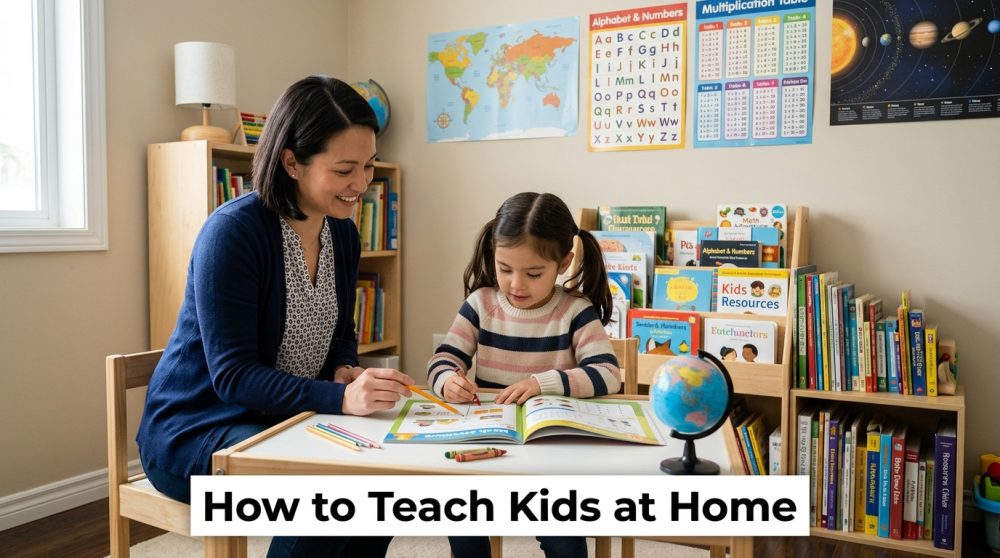
Teaching your child at home can feel overwhelming, especially if you’ve never done it before. You might wonder where to start, what subjects to teach, or whether you need to be a trained teacher. The good news is that you don’t need a teaching degree to help your child learn effectively. With a consistent routine, the right resources, and a supportive environment, you can build your child’s confidence, curiosity, and academic skills right from home.
Whether you’re supplementing your child’s school education, homeschooling full-time, or helping with homework after school, this guide covers the essential steps to make home learning successful.
What Does It Mean to Teach Kids at Home?
Teaching kids at home means providing structured learning outside a traditional classroom. It can involve full-time homeschooling, after-school support, holiday learning, or teaching practical life skills through everyday activities.
The goal isn’t to recreate a school classroom. Instead, it’s to create meaningful learning experiences that match your child’s age, interests, and pace of learning.
Why Teaching at Home Matters
A positive home learning environment helps children:
- Build strong reading, writing, and math skills.
- Develop confidence and independence.
- Learn at their own pace.
- Strengthen problem-solving and critical thinking.
- Create a lifelong love of learning.
- Spend quality learning time with parents or caregivers.
Even 30 to 60 minutes of focused learning each day can make a meaningful difference over time.
How to Teach Kids at Home Successfully
1. Create a Daily Learning Routine
Children thrive on routine. Set regular times for learning, breaks, meals, play, and bedtime. A predictable schedule helps children stay focused and know what to expect each day.
2. Set Up a Comfortable Learning Space
Choose a quiet, organized area with good lighting and minimal distractions. Keep books, pencils, paper, and learning materials within easy reach so your child can focus on learning instead of searching for supplies.
3. Teach According to Your Child’s Age
Every child learns differently.
- Toddlers (2–4 years): Focus on songs, picture books, colors, counting, and play.
- Preschoolers (3–5 years): Introduce letters, phonics, shapes, simple math, and storytelling.
- Elementary-age children: Teach reading, writing, math, science, and encourage questions.
- Older children and teens: Promote independent learning, research projects, discussions, and goal setting.
Avoid comparing your child’s progress with others. Every learner develops at their own pace.
4. Focus on Core Subjects First
Build a strong foundation by teaching:
- Reading
- Writing
- Mathematics
- Science
- Social Studies
Once these basics are covered, include art, music, physical activity, life skills, and creative projects to provide a well-rounded education.
5. Make Learning Fun
Children learn best when they’re engaged.
Use:
- Educational games
- Storytelling
- Arts and crafts
- Science experiments
- Puzzles
- Flashcards
- Outdoor activities
- Cooking and gardening
Turning lessons into enjoyable experiences keeps children motivated and helps them remember what they’ve learned.
6. Encourage Curiosity
Instead of giving every answer, ask questions such as:
- “What do you think will happen?”
- “Why do you think that works?”
- “How could we find the answer?”
Encouraging curiosity develops critical thinking and helps children become confident, independent learners.
7. Use Technology Wisely
Educational apps, online videos, virtual museums, and interactive learning platforms can enrich home learning. However, balance screen time with hands-on activities, reading, outdoor play, and family interaction.
8. Track Progress Without Pressure
Observe your child’s progress through conversations, reading practice, simple quizzes, creative projects, and everyday activities. Celebrate improvements, no matter how small, to build confidence and encourage a positive attitude toward learning.
Sample Daily Home Learning Schedule
A simple routine might look like this:
| Time | Activity |
|---|---|
| 9:00–9:30 AM | Reading |
| 9:30–10:00 AM | Math |
| 10:00–10:20 AM | Break and Snack |
| 10:20–11:00 AM | Science or Social Studies |
| 11:00–11:30 AM | Creative Activity or Art |
| 11:30–12:00 PM | Outdoor Play or Physical Activity |
Adjust the schedule based on your child’s age, attention span, and learning needs.
Common Mistakes to Avoid
Many parents unintentionally make home learning more difficult by:
- Trying to teach for too many hours.
- Expecting perfection.
- Comparing children with others.
- Skipping breaks.
- Relying too heavily on screens.
- Ignoring their child’s interests.
- Becoming frustrated when progress is slow.
Remember that learning is a gradual process, and consistency is more important than perfection.
Frequently Asked Questions
Do I need to be a qualified teacher to teach my child at home?
No. Parents can successfully support their children’s education by using quality learning resources, creating a consistent routine, and encouraging curiosity. If you’re homeschooling full-time, be sure to follow your local education laws and requirements.
How many hours should I teach my child each day?
It depends on your child’s age. Younger children often learn best through short, focused sessions mixed with play, while older children can concentrate for longer periods. Quality learning is generally more effective than simply increasing the number of hours.
What subjects should I teach first?
Start with reading, writing, and math, then gradually introduce science, social studies, creative arts, physical education, and practical life skills.
How can I motivate my child to learn?
Use positive encouragement, celebrate progress, include games and hands-on activities, allow children to explore topics they enjoy, and create achievable goals that build confidence.
Final Thoughts
Teaching kids at home doesn’t require a perfect classroom or expensive curriculum. What matters most is creating a positive learning environment where your child feels supported, encouraged, and excited to learn. By establishing a routine, focusing on essential subjects, adapting lessons to your child’s age and interests, and making learning interactive, you can help your child develop academically while also building confidence, independence, and a lifelong love of learning. Start small, stay consistent, and remember that every meaningful learning experience—whether through a book, a science experiment, or everyday life—helps shape your child’s future.