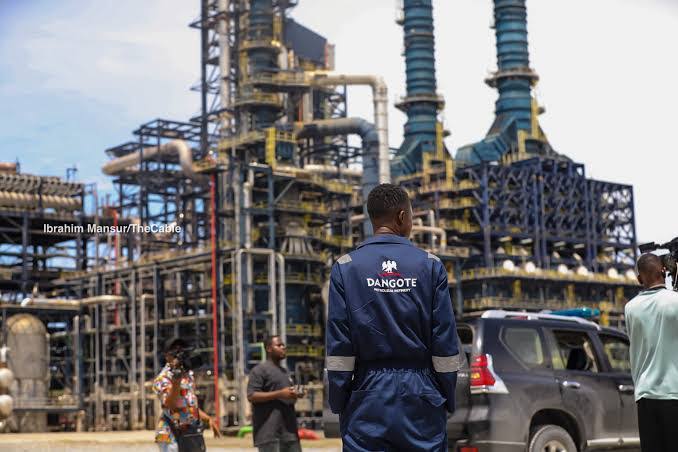
Many Nigerians expected petrol prices to fall significantly after the Dangote Refinery began supplying locally refined fuel. Instead, petrol remains expensive, with pump prices reaching around ₦1,400 per litre in parts of Nigeria in September 2026.
So, why is petrol still expensive in Nigeria even though the country now has a major private refinery?
The short answer is that Nigeria’s petrol price is influenced by global crude oil prices, exchange rates, crude supply, refining costs, transportation, taxes, market competition and the deregulated pricing system.
1. Global Crude Oil Prices Are High
One of the biggest reasons petrol remains expensive is the international price of crude oil.
Although Nigeria produces crude oil, the price of crude is determined largely by the international market. When global crude prices rise, the cost of producing or replacing refined petroleum products also increases.
In September 2026, Brent crude has moved above $100 per barrel, partly because of supply disruptions linked to the conflict involving the United States and Iran. This has put fresh pressure on fuel prices around the world, including Nigeria.
This means that local refining does not completely disconnect Nigeria from international oil prices.
2. The Dangote Refinery Still Buys Crude
A common misunderstanding is that because Dangote Refinery is located in Nigeria, it should be able to produce extremely cheap petrol.
The refinery still needs crude oil as its raw material.
One of the problems highlighted in Nigeria’s downstream market is the availability and cost of suitable domestic crude. Reuters previously reported that the Dangote Refinery had been forced to import crude, exposing the refinery to global price movements.
Therefore, producing petrol locally does not mean producing it from free or heavily subsidised crude.
3. Petrol Prices Are Now Largely Market-Driven
Nigeria’s petrol market has undergone a major change since the removal of the petrol subsidy.
Under the current deregulated system, petrol prices can rise and fall according to market conditions.
The Nigerian Midstream and Downstream Petroleum Regulatory Authority has identified factors including crude sourcing, refining, logistics and transportation costs as contributors to fuel-price volatility.
This is very different from a system where the government fixes a low pump price and pays the difference through a subsidy.
4. The Naira Exchange Rate Still Matters
Even when petrol is refined locally, the Nigerian petroleum industry remains connected to international markets.
Equipment, financing, shipping, some crude supplies and other parts of the petroleum value chain can involve foreign currencies.
A weaker naira can therefore increase the naira cost of petroleum-related operations.
The exchange rate also matters when comparing locally refined petrol with imported fuel because imported products are priced using international benchmarks and foreign-exchange costs.
5. Distribution and Transportation Add to the Price
Petrol does not travel directly from a refinery to every filling station.
It must move through a supply chain involving:
- Trucks
- Depots
- Marine transportation
- Storage facilities
- Loading operations
- Road transportation
- Filling stations
Each part of the supply chain has costs.
The NMDPRA has specifically pointed to logistics, transportation and marine and inland taxes as factors incorporated into petroleum-product pricing.
This helps explain why the price at a refinery’s gantry can be different from the price motorists see at a filling station.
6. Dangote’s Petrol Price Has Also Increased
Local refining has improved Nigeria’s supply situation, but it has not guaranteed a permanently low petrol price.
Dangote Refinery increased its petrol gantry price from ₦1,265 to ₦1,350 per litre on September 12, 2026.
That was the refinery’s fourth upward price adjustment since August 21, taking its petrol price up by ₦185 per litre, or about 15.9%, in 22 days.
As a result, filling stations have also raised their pump prices.
Recent reports put prices around ₦1,375 at some NNPC stations and about ₦1,400 at some MRS and independent stations.
7. Nigeria Has Not Completely Eliminated Petrol Imports
Another important factor is that local refining has not made imports completely irrelevant.
Recent industry data showed that imported petrol was actually more expensive than Dangote’s locally refined petrol before the latest price increase. In early September, import-parity petrol was about ₦1,310.64 per litre, compared with Dangote’s ₦1,265 gantry price at the time.
This shows that imports are not necessarily cheaper than local production.
However, Nigeria’s petrol supply can still include imported products when domestic supply is insufficient.
Why Doesn’t Dangote Refinery Make Petrol Cheap?
This is probably the biggest question Nigerians have.
The answer is that a refinery can reduce dependence on imports without eliminating the factors that determine the market price of petrol.
Dangote Refinery can produce petrol locally, but it still operates within a market affected by:
- Global crude prices
- Crude availability
- Refining economics
- Exchange rates
- Transportation
- Taxes and other charges
- Supply and demand
- International petroleum-product prices
In other words, local refining changes where the petrol is produced, but it does not completely remove the market forces that determine its price.
Why Is Petrol More Expensive Than Before the Subsidy Was Removed?
Before the subsidy reforms, the government effectively absorbed part of the cost of petrol.
After subsidy removal, consumers became more exposed to the actual economics of supplying petroleum products.
That resulted in a dramatic increase in petrol prices.
The trade-off is that the government no longer needs to spend enormous amounts maintaining the old subsidy system, while consumers bear more of the market cost directly.
The debate over whether Nigeria should return to some form of subsidy remains politically and economically contentious.
Will Petrol Prices Fall Again?
They could, but there is no guarantee.
A significant decline in global crude prices could reduce the cost of petrol.
A stronger and more stable naira could also reduce some petroleum-related costs.
Increased domestic crude supply to Nigerian refineries, greater refining competition and improved distribution infrastructure could also help.
On the other hand, continued international oil-price increases or supply disruptions could keep petrol expensive.
Will More Nigerian Refineries Reduce Fuel Prices?
More refining capacity could help Nigeria in several ways.
Greater domestic production could:
- Reduce dependence on imported petrol
- Reduce exposure to import logistics
- Improve supply security
- Create competition between suppliers
- Keep more petroleum-related economic activity inside Nigeria
However, more refineries alone will not guarantee cheap petrol.
If crude oil is expensive, the naira is weak and distribution costs remain high, locally refined petrol can still be expensive.
Why Petrol Is Expensive in Nigeria — Simple Explanation
For someone asking for the simplest answer:
Petrol remains expensive in Nigeria because the country now operates a largely market-driven fuel system, while global crude prices, crude supply, exchange rates, refining costs, transportation and other supply-chain expenses continue to affect the price.
The Dangote Refinery has reduced reliance on imported petrol, but it cannot completely isolate Nigeria from international oil-market conditions.
Petrol Price in Nigeria: September 2026
There is no single nationwide pump price because filling stations and locations can charge different prices.
However, recent September reports show petrol selling at approximately ₦1,375–₦1,400 per litre at some major stations, following Dangote Refinery’s increase of its gantry price to ₦1,350.
Prices can therefore differ between Lagos, Abuja, Ogun, and other parts of the country.
Frequently Asked Questions
Why is petrol still expensive in Nigeria?
Global crude prices, crude supply, exchange rates, transportation, refining costs and the deregulated fuel market are among the major reasons.
Why hasn’t Dangote Refinery made petrol cheap?
Dangote Refinery has increased local supply, but the refinery still operates within a market affected by global crude prices and other costs.
How much is petrol in Nigeria now?
As of September 2026, recent reports show pump prices around ₦1,375 to ₦1,400 per litre at some major stations, although prices vary by location and station.
Is Nigeria still importing petrol?
Yes. Nigeria’s domestic refining capacity has increased significantly, but imports can still form part of the country’s petrol supply when needed. Recent data showed imported petrol remained more expensive than Dangote’s local product at the time.
Will petrol become cheaper in Nigeria?
It is possible if global crude prices fall, the naira stabilises, domestic crude supply improves and competition and efficiency increase. But there is no guaranteed price reduction.
Conclusion
The high cost of petrol in Nigeria is not caused by one factor.
The arrival of the Dangote Refinery has changed Nigeria’s petroleum market, but local refining does not mean Nigeria is protected from global oil prices.
With Brent crude above $100 per barrel, rising refinery prices and a deregulated downstream market, Nigerian motorists remain exposed to changes in the international energy market.
The long-term solution is therefore bigger than simply building refineries. Nigeria also needs reliable crude supply to domestic refineries, efficient transportation, a stable currency, stronger competition and a petroleum market that can deliver reliable supply at competitive prices.