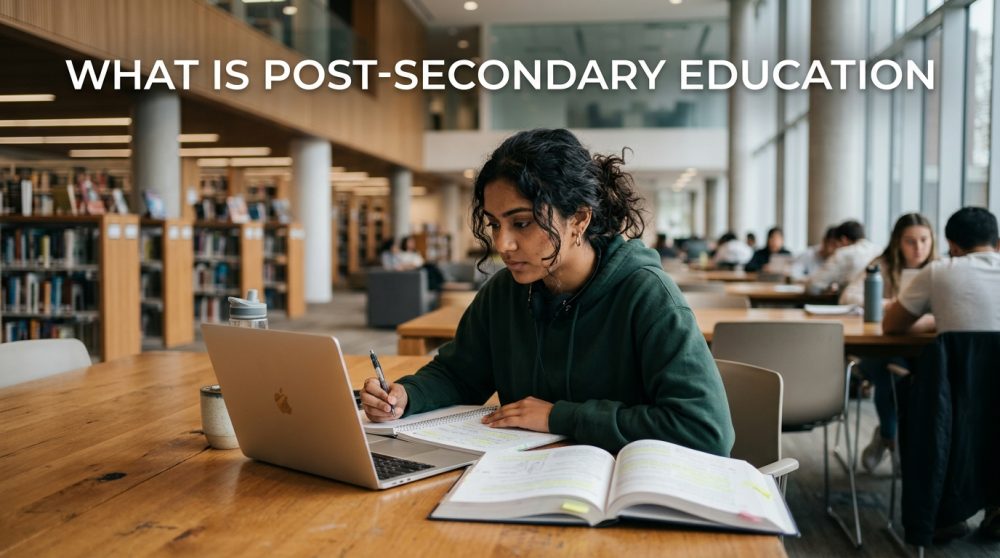
Post-secondary education refers to any education or training you pursue after completing high school (secondary school). It includes colleges, universities, vocational schools, technical institutes, trade schools, and professional certification programs.
Whether you want to earn a bachelor’s degree, learn a skilled trade, or gain a professional certification, post-secondary education can help you develop the knowledge and skills needed for your chosen career.
In this guide, you’ll learn what post-secondary education is, the different types available, its benefits, admission requirements, and answers to common questions.
What Is Post-Secondary Education?
Post-secondary education is any formal education that takes place after graduating from high school or earning an equivalent qualification, such as a GED in the United States.
Unlike compulsory primary and secondary education, post-secondary education is usually optional. Students choose programs based on their career goals, interests, and educational aspirations.
Post-secondary education can prepare students for:
- Professional careers
- Skilled trades
- Technical occupations
- Academic research
- Entrepreneurship
- Advanced studies
Why Is It Called Post-Secondary Education?
The term “post-secondary” simply means “after secondary education.”
The education system is generally divided into:
- Primary education (elementary school)
- Secondary education (middle school and high school)
- Post-secondary education (college, university, vocational training, and other higher education)
Because it comes after high school, it is called post-secondary education.
Types of Post-Secondary Education
There are several forms of post-secondary education.
1. Community Colleges
Community colleges typically offer:
- Associate degrees
- Certificate programs
- Diploma programs
- Workforce training
Many students begin at a community college before transferring to a four-year university.
2. Colleges and Universities
Colleges and universities offer undergraduate and graduate degree programs.
Common degrees include:
- Associate degree
- Bachelor’s degree
- Master’s degree
- Doctoral degree
Universities often provide research opportunities, internships, and campus activities.
3. Vocational and Technical Schools
Vocational schools focus on career-specific training.
Programs may prepare students for careers such as:
- Electrician
- Plumber
- Welder
- Automotive technician
- Dental assistant
- Medical technician
- HVAC technician
- Cosmetologist
These programs often emphasize hands-on learning.
4. Trade Schools
Trade schools teach practical skills needed for specific occupations.
Many programs can be completed in less time than a traditional college degree.
5. Professional Schools
Professional schools prepare students for licensed careers.
Examples include:
- Medical school
- Law school
- Pharmacy school
- Veterinary school
- Dental school
Admission usually requires completing a bachelor’s degree first.
6. Online Colleges and Universities
Many accredited institutions now offer online degree and certificate programs.
Students can study remotely while balancing work or family responsibilities.
Common Post-Secondary Degrees
Students can earn different types of qualifications depending on their educational goals.
Certificate
- Usually takes a few months to one year.
- Focuses on specific job skills.
Diploma
- Often takes one to two years.
- Common in technical and vocational programs.
Associate Degree
- Typically completed in two years.
- Offered by many community colleges.
Bachelor’s Degree
- Usually requires four years of study.
- Common requirement for many professional careers.
Master’s Degree
- Completed after earning a bachelor’s degree.
- Usually takes one to two years.
Doctoral Degree
- The highest academic degree.
- Includes Ph.D., Ed.D., M.D., and other professional doctorates.
Benefits of Post-Secondary Education
Pursuing education after high school offers many advantages.
Better Career Opportunities
Many employers require applicants to have post-secondary education or specialized training.
Higher Earning Potential
On average, individuals with post-secondary education often earn more over their lifetimes than those with only a high school diploma. However, earnings vary by field, location, and experience.
Skill Development
Students gain valuable technical, analytical, communication, and problem-solving skills.
Professional Networking
Colleges and training institutions help students build relationships with professors, classmates, employers, and industry professionals.
Personal Growth
Post-secondary education encourages:
- Critical thinking
- Independence
- Leadership
- Time management
- Confidence
Admission Requirements
Requirements vary depending on the institution and program.
Applicants may need:
- High school diploma or equivalent
- Academic transcripts
- Standardized test scores (if required)
- Letters of recommendation
- Personal statement or essay
- Application form
- Application fee (if applicable)
Some vocational programs have fewer admission requirements than four-year universities.
Is Post-Secondary Education the Same as Higher Education?
The terms are closely related and are often used interchangeably.
In many countries:
- Post-secondary education refers to all education after high school.
- Higher education generally refers to degree-granting colleges and universities.
However, post-secondary education is broader because it also includes vocational schools, trade schools, apprenticeships, and certificate programs.
Examples of Post-Secondary Education
Examples include:
- Earning a bachelor’s degree in Business Administration
- Completing a nursing program
- Attending a community college
- Training as an electrician
- Enrolling in a coding bootcamp
- Studying automotive technology
- Completing a culinary arts program
- Attending medical school
- Completing an apprenticeship
All of these occur after high school and are considered forms of post-secondary education.
How to Choose the Right Post-Secondary Program
When selecting a program, consider:
- Your career goals
- Program accreditation
- Tuition and fees
- Financial aid availability
- Program length
- Graduation rates
- Job placement rates
- Location or online options
- Internship opportunities
- Expected salary in your chosen field
Researching these factors can help you make an informed decision.
Frequently Asked Questions
What does post-secondary education mean?
Post-secondary education refers to any formal education or training pursued after completing high school or an equivalent qualification.
Is college considered post-secondary education?
Yes. Colleges and universities are among the most common forms of post-secondary education.
Is vocational training post-secondary education?
Yes. Vocational schools, technical institutes, trade schools, and many apprenticeship programs are all forms of post-secondary education.
Do you need a high school diploma for post-secondary education?
Most post-secondary institutions require a high school diploma or an equivalent qualification, though some programs have alternative admission pathways.
Is post-secondary education required?
In most countries, post-secondary education is optional. However, many careers require education or training beyond high school.
What is the difference between secondary and post-secondary education?
Secondary education refers to middle school and high school, while post-secondary education begins after high school and includes colleges, universities, vocational schools, and other advanced training programs.
Final Thoughts
Post-secondary education is any education or training pursued after high school. It includes colleges, universities, vocational schools, trade schools, technical institutes, apprenticeships, and professional programs. Whether your goal is to earn a degree, learn a skilled trade, or gain specialized certification, post-secondary education can provide the knowledge, skills, and credentials needed to pursue a rewarding career. By choosing a program that aligns with your interests, abilities, and career goals, you can make a valuable investment in your future.